

East African farmers, who are mostly small-scale, currently select their seed potatoes from the mass of harvested potatoes. That results in lots of virus diseases and potato brown rot, as well as low yields of an average of 10.5 tons per hectare.
That is why international organizations are advising farmers to buy their seed potatoes from specialized seed potato companies. But that requires a change in farming practices - currently the small-scale farmers use their own potatoes or swap with their neighbours - and will increase costs for the farmers. That is why only 5 percent of the seed potatoes in countries such as Kenya, Uganda and Ethiopia come from such specialized companies.
Gildemacher studied the reintroduction of what was thought to be an unnecessary technique: selecting seed potatoes from parent plants that look healthy. He carried out field trials at 18 different locations to investigate the effect of self-selection when compared with the standard practice in which farmers take their seed potatoes from the mass of harvested potatoes.
These field trials showed that self-selection increased yields by 30 percent while the disease pressure from potato viruses fell by between 35 and 40 percent. The big advantage, says Gildemacher, is that selecting the seed potatoes themselves costs the farmers virtually nothing whereas the return on a hectare of potatoes increases by 250 to 300 euros.
After his field trials, Gildemacher, who worked for the International Potato Center (CIP) in Nairobi from 2003 to 2007, developed a cost-effective training module to teach large numbers of small-scale farmers how to select the best seed potatoes themselves.
He does point out that the farmers will still need to replace their stock of seed potatoes regularly with disease-free starting material obtained from the specialized companies. Gildemacher's approach has now been adopted in the farming guidelines in Kenya and is also being introduced in countries such as Ethiopia, Uganda, Rwanda, Malawi, Mozambique and Angola. These countries want to increase the productivity of potato crops so that they can meet the growing demand.
Peter Gildemacher will be awarded his doctorate on 20 June, with Paul Struik, professor of Crop and Weed Ecology, and Cees Leeuwis, professor of Communication and Innovation Studies.
East Africa: better selection of seed potatoes improves yield thirty percent
Like to receive news like this by email? Join and Subscribe!
Get the latest potato industry news straight to your WhatsApp. Join the PotatoPro WhatsApp Community!
Sponsored Content
精选企业

Related News
四月 30, 2026
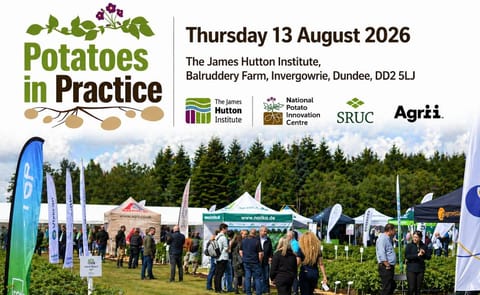
Potatoes in Practice 2026 to take place in Scotland on August 13 with focus on future of potato industry
Potatoes in Practice 2026, Scotland's largest field-based potato event, will take place on Thursday, August 13, at The James Hutton Institute's Balruddery Farm in Invergowrie, near Dundee.
四月 30, 2026
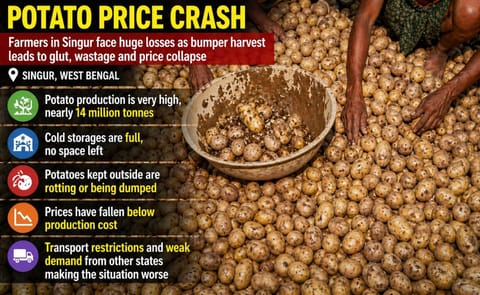
Potato surplus in West Bengal triggers price crash and large-scale wastage
The bumper potato harvest in West Bengal's Singur has led to a price crash and large-scale wastage. On the ground, heaps of potatoes are lying in the open, with produce rotting and farmers dumping stock.
四月 29, 2026
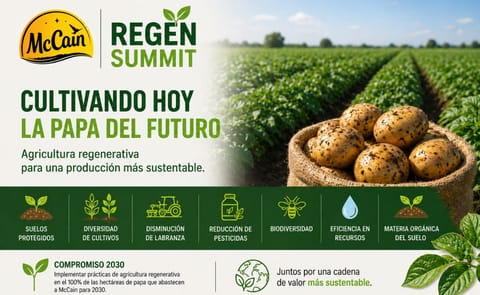
Argentina: McCain drives regenerative agriculture practices
The goal is to accelerate the transition of the entire value chain toward more sustainable agricultural production models.
Latest News
Sponsored Content
Sponsored Content
Sponsored Content

Sponsored Content