

Introduction: The Diverse and Colorful World of Leaf Beetles
Leaf beetles (Chrysomelidae) represent a cornerstone of insect biodiversity, encompassing more than 37,000 described species across over 2,500 genera, with recent estimates suggesting total diversity may exceed 60,000 species when accounting for undescribed taxa in tropical hotspots. This family second only to Curculionidae in beetle diversity comprises primarily phytophagous specialists whose larvae and adults feed on leaves, stems and roots, profoundly shaping plant communities through herbivory that influences ecological succession and nutrient cycling.
Ecologically, leaf beetles occupy pivotal roles in food webs, serving as prey for birds, spiders and parasitoids, while their feeding stimulates plant defense responses such as jasmonic acid pathways, cascading to affect higher trophic levels.
Economically, their dual significance is evident: major pests like the Colorado potato beetle (Leptinotarsa decemlineata) and flea beetles (Phyllotreta spp.) cause billions of dollars in annual crop losses, whereas beneficial species such as Zygogramma philanthoides function as biocontrol agents against invasive weeds like ragweed, saving millions in management costs.
Morphologically, their often iridescent exoskeletons ranging from the emerald sheen of dogbane beetles (Chrysochus auratus) to the vivid red of lily beetles (Lilioceris lilii) frequently signal chemical defense through sequestered plant alkaloids, deterring predators in striking displays of Mullerian mimicry.
Subfamilies exhibit remarkable adaptations: Alticinae “flea” beetles leap up to 30 cm using enlarged hind legs, Cassidinae larvae shelter beneath fecal shields and Cryptocephalinae larvae construct portable cases from frass for protection.
Fossil and phylogenomic evidence trace the lineage to the Cretaceous, coinciding with angiosperm radiation that fostered intense coevolutionary diversification illustrated by flea beetles’ associations with more than 100 plant families. Amid accelerating climate change the ecological and agricultural importance of Chrysomelidae demands renewed attention, as their expanding ranges threaten crop productivity while simultaneously contributing to biodiversity in restored and transitional ecosystems.
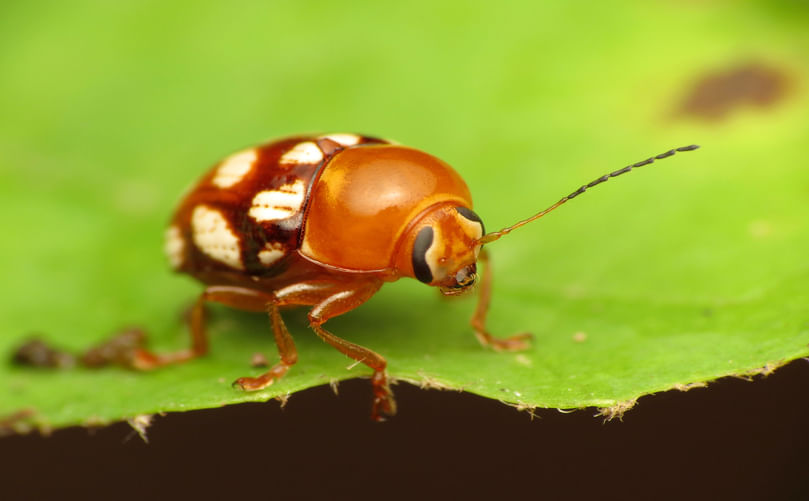
The Diverse and Colorful World of Leaf Beetles (Chrysomelidae)
History: Evolutionary Origins and Fossil Record
The evolutionary saga of Chrysomelidae unfolds from the Mesozoic, with the oldest unequivocal fossils unearthed in Early Cretaceous Aptian amber from Kachin, Myanmar (Approximately 99–110 million years ago), depicting early flea beetles with hypertrophied hind femora for jumping traits predating angiosperm dominance. Disputed Jurassic imprints (Approximately 165 mya) from Daohugou beds hint at even deeper roots, but molecular clocks align divergence around 140–150 mya within Cucujiformia, coinciding with gymnosperm herbivory before the angiosperm explosion.
Cenozoic diversification accelerated post-K–Pg boundary, with Eocene Baltic amber yielding over 100 species, including proto-Cassidinae with shield-like elytra, as angiosperms radiated into 300+ families. Phylogenomic studies, leveraging mitogenomes from 16+ subfamilies, resolve higher-level relationships: a basal split between Bruchinae (seed-feeders) and the rest, with Alticinae and Galerucinae forming a monophyletic “flea” clade via horizontal gene transfer (HGT) of plant cell wall-degrading enzymes (PCWDEs) from bacteria and fungi, enabling tough leaf digestion.
Recent research unveils symbiosis-driven herbivory: leaf beetles acquired diverse PCWDE suites through ancient microbial transfers, fostering polyphagy in lineages like Diabrotica. Museomic studies on alpine Oreina reveal Pleistocene refugia shaping genetic diversity, with 25 species emerging via host shifts on Asteraceae. Flea beetle (Alticini) radiations, documented in 2023, trace “jumps” to new hosts across 100+ families, mirroring continental drift e.g., Australopapuan endemics tied to Gondwanan flora.
Human epochs amplified impacts: Neolithic agriculture selected pest strains, while 20th-century trade globalized invaders. This 125-million-year chronicle positions Chrysomelidae as exemplars of insect–plant arms races, with ongoing HGT and hybridization fueling adaptability amid modern extinctions.
Global Distribution and Diversity
Chrysomelidae exhibits a near-cosmopolitan distribution, occurring on all continents except Antarctica. Alpha-diversity peaks in the Neotropics (>10,000 species, approximately 40% of the family total) and Indo-Malaya (e.g., 5,000+ species in India), driven by humid tropical conditions that promote host radiations on understory flora. Temperate hotspots include the Palearctic (~3,500 species) and Nearctic, while Australasia harbors endemic chrysomelines closely associated with eucalypts.
Recent surveys highlight substantial undescribed diversity: New Caledonia’s Eumolpinae exceed 200 species, many ultramicroendemic to nickel-hyperaccumulating plants, while African Alticini exhibit latitudinal gradients, with the highest genus counts (50+) in the equatorial Congo Basin, declining toward southern latitudes. Global DNA barcode libraries currently cover less than 20% of known species and are heavily biased toward Europe and North America, leaving significant phylogenetic gaps, particularly in Amazonian Galerucinae.
Invasive species and trade have reshaped distribution patterns. For example, Monolepta spp. are projected to expand across Southeast Asia under future warming scenarios, gaining approximately 30% more suitable habitat according to MaxEnt models integrating bioclimatic variables. Japanese fauna include 1,200+ species reflecting volcanic island endemism, with 20% threatened by habitat loss. Climate projections for Saudi Arabia forecast 15–25% range contractions for arid-adapted taxa, but expansions for multivoltine pests such as Brontispa longissima into date palms.
Beta-diversity is particularly high in ecotones; forest edges can double guild richness through forest cover gradients, yet urbanization fragments populations and reduces connectivity by up to 40%. Overall, global estimates suggest approximately 50,000 potential species, emphasizing the conservation urgency of tropical hotspots, as 10–15% of species face extinction risks from deforestation and habitat degradation.
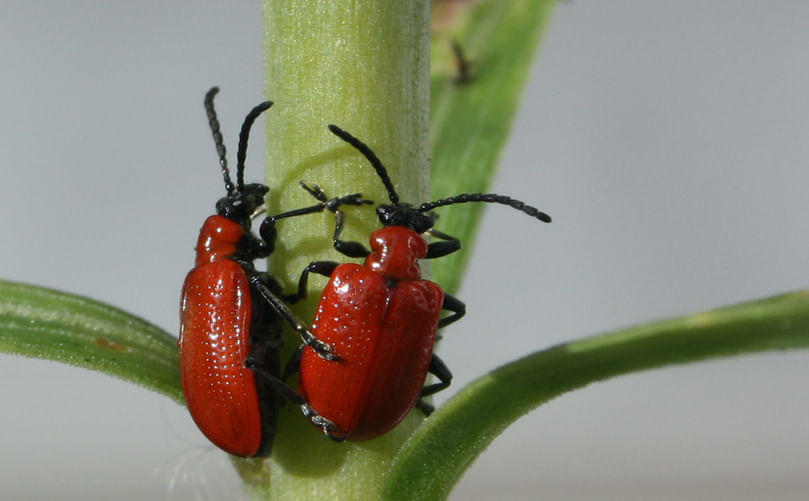
Global Distribution and Diversity of Leaf Beetles (Chrysomelidae)
Host Range and Cross-Infection Dynamics
Host Range and Cross-Infection Dynamics Leaf beetles (Chrysomelidae) exhibit a wide spectrum of host specificity. Approximately 60% are monophagous, feeding on a single plant genus (e.g., Lilioceris on Liliaceae), 30% are oligophagous within a plant family (e.g., Chrysomela on Salicaceae), and 10% are polyphagous, such as Diabrotica virgifera, which feeds across Poaceae, Fabaceae, and Cucurbitaceae. Flea beetles alone exploit over 100 plant families by detecting volatile cues and detoxifying glucosinolates. Larval host ranges are often narrower than adults; for example, leaf-mining larvae of 64 Chrysomeloidea species target parenchyma tissues of tracheophytes, creating serpentine galleries that evade plant defenses.
Many Australian leaf beetles feed primarily on angiosperms, particularly Eucalyptus and Acacia, with some species (Paropsis spp., Chrysophtharta spp.) recognized as significant forestry pests. Seed-feeding chrysomelids consume seeds or pods of Leguminosae, Palmaceae, and Convolvulaceae. Tortoise beetles typically specialize on Convolvulaceae, spiny leaf beetles mainly on monocots and occasionally Acacia, and shining leaf beetles primarily on monocots (grasses and orchids), though some also feed on Solanaceae and Cycadaceae. Monolepta spp. display the broadest host range, feeding on a variety of fruits, vegetables, and nursery stock plants, especially Syzygium species.
Host shifts are facilitated by horizontal gene transfer (HGT)–acquired plant cell wall-degrading enzymes (PCWDEs), enabling lineages like Alticini to jump from Brassicaceae to Solanaceae, driving speciation. Cross-infection dynamics amplify ecological and economic impacts. Adults mechanically vector pathogens such as Xanthomonas, transmitting bacterial leaf spots (e.g., 20–40% incidence in tomatoes via Phyllotreta), while larval frass inoculates fungi like Alternaria into wounds, promoting early blight development.
Fungal pathogens such as Beauveria bassiana exploit beetle aggregations, while herbivory can suppress plant salicylic acid defenses, facilitating Phytophthora oospore germination two- to threefold. Tritrophic cascades occur when beetle-induced jasmonic acid volatiles recruit parasitoids but deter pollinators, influencing disease escape. Gut microbiomes—including Wolbachia and Serratia—modulate alkaloid sequestration, affecting vector competence for viruses such as Potato Virus Y.
In mixed infections, early beetle damage can triple fungal sporulation, reducing yields by up to 50% through weakened plant immunity. Management strategies target these complex interaction webs, for example, by using resistant host varieties expressing RNA interference against beetle PCWDEs to limit both herbivory and secondary rots.
Global Economic Burden and Quality Losses
Leaf beetles (Chrysomelidae) impose a substantial economic toll on global agriculture, with direct crop losses and management costs exceeding USD 10 billion annually. Key pests driving these losses include the Colorado potato beetle (Leptinotarsa decemlineata), flea beetles (Phyllotreta spp.) and cereal leaf beetles (Oulema melanopus).
In North America, the Colorado potato beetle alone accounts for USD 100–200 million in U.S. losses yearly, with defoliation reducing potato yields by up to 70%. Flea beetles devastate canola in the Canadian prairies, slashing yields by 83 kg/ha (equivalent to USD 150–300/ha) without seed treatments or sprays. In Europe, cereal leaf beetle outbreaks cost EURO 50–100 million annually in barley and wheat, with larval skeletonization causing 20–40% grain weight reductions and quality downgrades due to secondary fungal mycotoxin contamination.
In sub-Saharan Africa, bean leaf beetles (Ootheca spp.) inflict 20–50% losses on common beans, a staple for 200 million people, exacerbating food insecurity and increasing prices by 15–25% in affected markets. Asia faces escalating burdens from coconut leaf beetles (Brontispa longissima), which damage palm plantations valued at USD 500 million in Indonesia alone.
Quality losses compound economic impacts: defoliation reduces photosynthetic efficiency, leading to smaller tubers (e.g., 30% size reduction in potatoes), decreased starch content (10–20% drop) and malformed grains prone to storage rots, increasing post-harvest waste by 15%. Climate change further amplifies risks, with projected 15–25% higher damages by 2030 due to expanded pest ranges and increased generational turnover. Land-use changes, such as rainforest conversion to cash crops like oil palm, reduce beetle diversity by up to 70% but intensify outbreaks in monocultures, with pest densities surging 2–3-fold.
Biocontrol offsets some losses for example, Zygogramma spp. save an estimated USD 20 million per year by controlling ragweed but resistance to over 30 insecticides imposes an additional USD 1–2 billion in research, development and rotation costs. These economic burdens threaten sustainable production, particularly in developing regions where smallholders bear up to 60% of the impacts.
Biology, Life Cycle, and Pathogenicity of Leaf Beetles (Chrysomelidae)
Leaf beetles are small to medium-sized insects, typically ranging from 1–20 mm, with body shapes varying across taxa. Most species are circular to oval with a strongly domed back, while others are elongated and narrow. Flea beetles possess strongly developed hind legs adapted for jumping. Adults may be brightly colored with stripes or patterns in red, yellow, orange, or green, or more subdued in white, grey, or black; some species exhibit iridescence. Antennae are usually cylindrical, less than half the body length, occasionally broadening slightly toward the apex.
Eggs are laid singly or in clusters on foliage, stems, or occasionally soil. They may be flat, upright, loosely arranged, or tightly packed, sometimes resembling a cluster of flowers. Typical coloration is orange to yellow, with an ovoid shape similar to ladybird beetle eggs. Eggs generally hatch within 3–14 days, depending on temperature and species.
Larvae are highly variable in appearance. Foliage-dwelling species are eruciform, resembling short, squat caterpillars without prolegs, while internal feeders may have reduced or absent legs. Larvae are usually pale shades of white, cream, brown, or black, sometimes with orange or yellow markings, and often speckled with small dark dots on each segment. The head is typically dark and sclerotized. Some larvae carry their excreta on their backs as a protective cover, aiding in concealment from predators. All larvae possess mandibles for feeding.
Larval development proceeds through 3–5 instars, consuming 10–100 times their body weight in foliage. Larvae may be diurnal or nocturnal feeders, depending on species. Pupation occurs on foliage, within leaves or stems, or in the soil. Pupae resemble larvae but are shorter, stouter, immobile, and do not feed. Development from pupa to mature adult usually takes 5–15 days, with teneral adults requiring several days to become reproductively active.
Adult leaf beetles are holometabolous and typically live 30–90 days, laying 200–800 eggs per female. Species may be univoltine in temperate zones (e.g., elm leaf beetle, Pyrrhalta luteola) or multivoltine in warmer climates, with two to four generations per year; tropical species may have continuous life cycles. Overwintering generally occurs as adults or eggs, with survival rates of 70–90% in mild winters.
Leaf beetles are primarily phytophagous. Adults and larvae feed on leaves, flowers, stems, or roots, depending on the species. Feeding is mechanical and enzymatic: mandibles rasp or chew plant tissues, and saliva containing proteases and amylases suppresses plant defenses and facilitates secondary infections. Larval frass may harbor fungal pathogens such as Botrytis, while adult feeding can reduce grain fill by up to 40% in cereals. Gut microbiomes, enhanced through horizontal gene transfer, produce cellulases and pectinases that aid in plant cell wall digestion and enable sequestration of defensive alkaloids for predator deterrence.
Understanding the biology and life cycle of leaf beetles—including egg laying, larval development, pupation sites, voltinism, and overwintering—is critical for timing pest management interventions
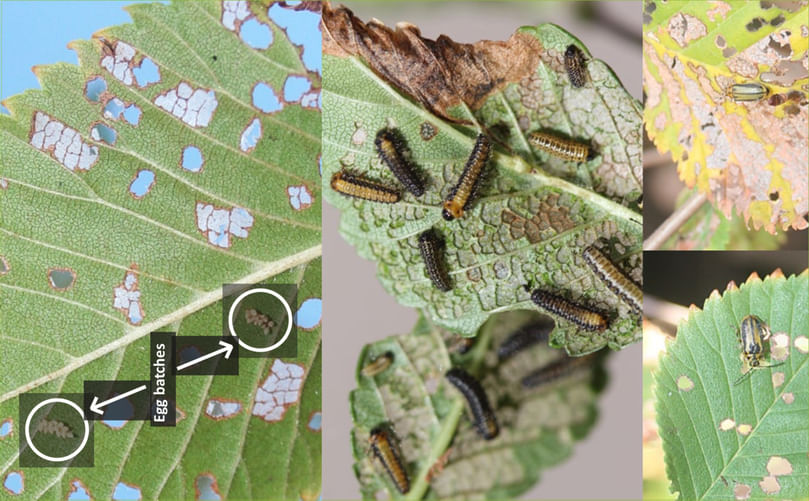
Lifecycle of the elm leaf beetle (Xanthogaleruca luteola). Shown are egg batches and larvae . Adults exhibit natural variation in coloration pupae are not depicted. Larval image courtesy of Whitney Cranshaw, Colorado State University,
Pathogenicity is primarily mechanical and enzymatic. Adults can transmit bacteria, such as Xanthomonas, via mouthparts, increasing incidence of leaf spot diseases, while larval frass can inoculate fungi like Alternaria or Botrytis, exacerbating early blight and rot. Herbivory also modifies plant defenses, with suppressed salicylic acid responses facilitating pathogen germination. Gut symbionts (e.g., Wolbachia, Serratia) modulate alkaloid sequestration, influencing beetles’ vector competence for viruses such as Potato Virus Y. In mixed infections, early beetle damage can dramatically enhance fungal sporulation and reduce yields by up to 50%. Management strategies targeting these pathways—such as RNA interference against beetle PCWDEs have shown significant reductions in herbivory and secondary disease incidence.
Management Strategies for Leaf Beetles
Integrated pest management (IPM) for leaf beetles relies on a combination of cultural, biological, chemical, and physical strategies to control populations while minimizing resistance and environmental impact. Regular monitoring of pest populations is critical, particularly during spring, summer, and autumn, when damage is most likely. Observations should include eggs, larvae, adults, and visible feeding damage, as well as potential pathways of infestation, such as beetles migrating from nearby natural vegetation.
Cultural practices form the foundation of management. Crop rotation disrupts beetle life cycles, reducing populations by denying host plants over successive seasons. Trap cropping, which involves planting attractive border crops like oats or radishes a few weeks before the main crop, can divert beetles and allow for targeted treatment of infested strips. Tillage buries pupae, decreasing adult emergence, while careful timing of planting can help seedlings avoid peak beetle activity. Selecting resistant varieties, maintaining optimal plant health, pruning damaged growth, and removing overwintering sites further reduce beetle pressure in production systems.
Biological control leverages natural enemies to suppress populations. Parasitoids such as Tetrastichus julis can achieve high levels of larval parasitism in cereal crops, though environmental conditions may affect their effectiveness. Maintaining untreated refuges supports these beneficial populations. Predators, including ladybugs and green lacewings, contribute supplementary suppression, while microbial agents such as Bacillus thuringiensis target early-instar larvae effectively when applied according to degree-day models. Entomopathogenic fungi and nematodes, including Beauveria bassiana, are particularly useful against soil-dwelling stages, reducing pest densities significantly in organic systems.
Chemical control is used judiciously and only when populations reach economic thresholds, such as half a beetle per plant or 10–25% defoliation. Treatments are most effective when targeted to infested areas, including tree trunks for nocturnal feeders, which reduces pesticide use and preserves beneficial insects. Rotating insecticides with different modes of action is critical to prevent resistance. Registered active ingredients vary depending on region and crop, with examples including dimethoate, maldison, carbaryl, and spinetoram. Because broad-spectrum insecticides can affect non-target species and natural enemies, their use must be carefully timed and integrated with cultural and biological controls to maximize effectiveness while minimizing environmental impact.
Emerging tools and technologies complement traditional strategies. RNA interference (RNAi)–based biopesticides show promise for highly specific control by silencing key beetle genes, and AI-driven scouting and real-time monitoring tools help optimize the timing of interventions, reducing unnecessary pesticide applications.
Successful management depends on integrating these approaches, considering species-specific biology, life cycle, host preferences, and local environmental conditions. Weekly scouting, informed by pest phenology, enables early detection and intervention. For example, in Pacific Northwest cereals, combining biocontrol assessments with cultural refuges has maintained yields while reducing pesticide costs by 20–30%. By combining monitoring, cultural methods, natural enemies, and targeted interventions, growers can effectively reduce leaf beetle damage while supporting sustainable production.