
Push by Agriculture Commissioner to grow potatoes in West Virginia
Push by Agriculture Commissioner to grow potatoes in West Virginia
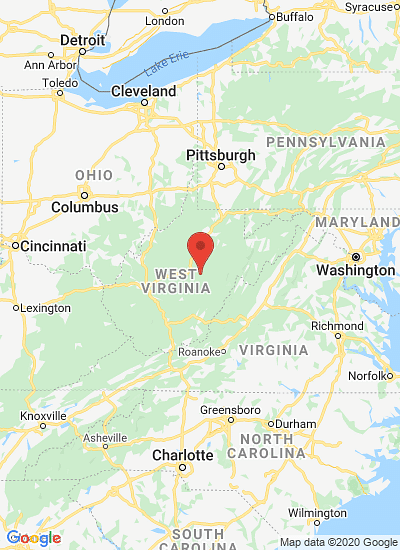
State Agriculture Commissioner Walt Helmick is on a mission to create jobs by convincing West Virginian landowners to produce potatoes — lots of potatoes.
Helmick plans to help West Virginians with tillable land plant five, 10 or 15 acres of potatoes at a time. He envisions an average of 60 acres planted in potatoes in 50 of the state’s 55 counties this year.
That would total 3,000 acres.
Compared to “the big guys” — the states of Idaho and Washington — “that is a pittance,” Helmick said. “However, it’s big for us.”
The 2012 Census of Agriculture found that just 335 acres in West Virginia were devoted to potato production. Idaho harvested potatoes from 345,217 acres that year. Washington had 163,925 acres of potatoes.
“The big guys get 1,000 bushels an acre,” Helmick said. “We think we can get 400 bushels to the acre.”
Last year the state Agriculture Department contracted with Black Gold Farms of Grand Forks, N.D., to test grow 14 varieties of potatoes on department-owned land at Lakin and Huttonsville. Black Gold reported that the Atlantic and Snowden varieties produced particularly good yields at Lakin.
Atlantic and Snowden potatoes have white flesh. They are primarily processed into potato chips.
“We’ve learned a great deal but we also had our eyes opened to a number of issues we have to address, none of which we feel are insurmountable,” Helmick said.
“The Black Gold analysis says the Lakin property — we like to call it our western property, on the Ohio River — is quality land. We know we can grow white potatoes, cabbage, corn and a number of products on land on the western side of the state. That’s what we’ve determined from the analytical work that Black Gold did.
“They also said that the land in Randolph County, our Huttonsville land, would be a challenge. They pointed out things we need to know as we move forward in north-central West Virginia and Randolph County and all of eastern West Virginia.”
Black Gold said nitrogen needs to be added to the Huttonsville soil. The analysis “also opens our eyes to the fact we have to maintain the volume of water more closely than we had anticipated,” Helmick said. “Obviously it’s ideal if you can just plant the potatoes and the good Lord will give you enough water every day. That’s not the way it’s going to work. We know we’re going to have to start looking at an irrigation system.
“This year we will do what Black Gold told us to do and we look to have a significant crop,” he said. “We’re going to plant some different varieties. But the work we do at the Department of Agriculture is now and will always be just a guide to private growers.
“As time moves on we want private growers throughout West Virginia growing the product. We want to help them learn how to grow different products.”
Helmick envisions landowners interested in growing potatoes contacting his office and having a West Virginia University or West Virginia State University extension agent verify that the landowner has suitable property.
Because “you can’t buy a tractor to plant 10 acres,” Helmick wants to enlist farm-equipment dealers to provide tractors and other equipment needed to plant potatoes. He envisions the landowners paying a fee for the services.
A local conservation district supervisor would oversee the operation for the first one, two or three summers, Helmick said.
“We’ll also teach them (landowners) the financial end of it — not only how to grow it but how to grow it to where it’s economically feasible to make a job of it and create a job that will see an improved lifestyle,” Helmick said.
“We’re not going to invent a wheel. What we’re doing is going back and re-inventing something that was once there, using modern technology. The technology that was used when agriculture was abandoned in West Virginia in the 1930s and ‘40s and somewhat in the ‘50s was totally different. Modern technology will allow us to get more product per acre. It will also teach us to grow inside product. But right now, in this coming year, we’re going to focus on the potato industry.”
If Helmick succeeds in having potatoes grown on 3,000 acres and the average yield is 400 bushels per acre, the crop will total 1.2 million bushels of potatoes.
“We’ve never seen that many potatoes in West Virginia,” he said. “We’re going to have to figure out where we’re going to sell all of these.”
There is time between now and the harvest to resolve that issue, Helmick said. He thinks growers will find a ready market.
Like to receive news like this by email? Join and Subscribe!
Get the latest potato industry news straight to your WhatsApp. Join the PotatoPro WhatsApp Community!
精选企业

Related News
六月 04, 2026
Potato diversity from the Andes supports climate resilience efforts in East Africa
Modern potatoes are bred from a relatively narrow genetic pool, while the diseases and environmental pressures affecting potato production continue to evolve.

六月 03, 2026
International Day of the Potato highlighted the role of potatoes in food security and sustainability
On May 30, the International Day of the Potato was celebrated worldwide, highlighting the potato’s role in food security, sustainability, economic development and culinary diversity beyond its importance as a staple food.
六月 02, 2026
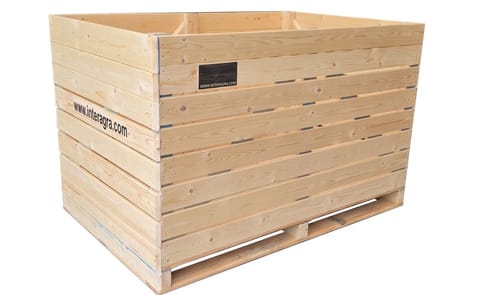
Inter Agra highlights how wooden crate details reduce crop damage during storage
Maintaining crop quality after harvest remains a major challenge for potato, onion and carrot producers, particularly during long-term storage where mechanical damage can reduce product quality and market value.