

American Waistlines Are Still Expanding, Study Finds
American Waistlines Are Still Expanding, Study Finds
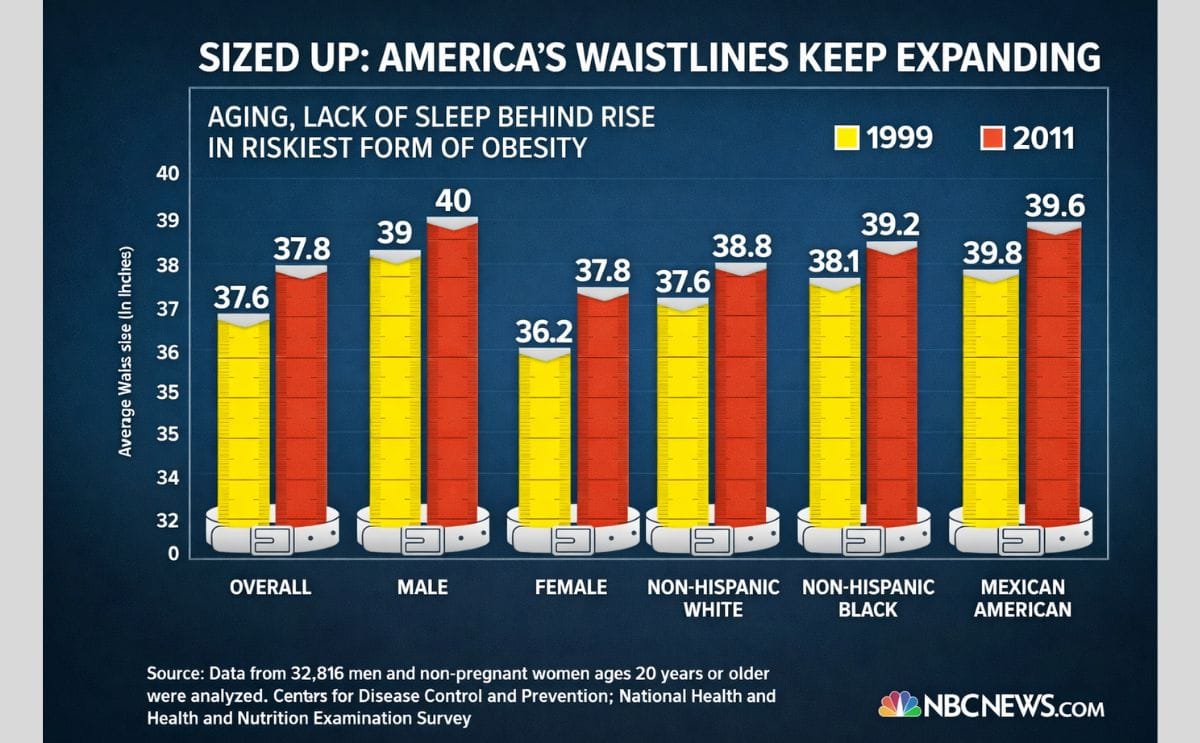
American adult waistlines are still spreading, a new study finds. While body mass index, a key measure for obesity, has stabilized, American bellies have increased an inch over the last decade — to a circumference of almost 39 inches. That's bad news, researchers say.
“[Waist circumference] has kind of been picking up year after year [while] BMI flat-lined a little bit,” says Dr. Earl Ford, a medical officer at the Centers for Disease Control, and an author of a recent report published in the Journal of the American Medical Association.
CDC researchers looked at 32,816 people older than 20 from 1999 until 2011-2012, using National Health and Nutrition Examination Survey (NHANES) data to assess weight. Average age was 45. During this time, waist circumference increased from 37.6 inches in 1999-2000 to 38.8 inches in 2011-2012. Overall women’s waists increased by 1.5 inches to an average of 37.8 inches. African-American waists increased by 1.6 inches to 39 inches, while Mexican-Americans saw an increase of 1.8 inches to 39.6 inches.
Abdominal obesity is defined as a waist circumference greater than 40.2 inches in men and greater than 34.6 inches in women.
It's unclear why waistlines are still expanding while BMI hasn't changed.
Like to receive news like this by email? Join and Subscribe!
Get the latest potato industry news straight to your WhatsApp. Join the PotatoPro WhatsApp Community!
Sponsored Content
Related News

四月 21, 2026
Spain: stronger agri-food border controls with more physical inspections
The government says that the reorganization of border controls made it possible to increase physical inspections of agri-food products by 7.5% in one year, strengthening oversight of imports and exports amid growing trade flows.

四月 08, 2026
Europe: ecological requirements for the agro-industrial sector
All packaging placed on the EU market must be recyclable by 2030, while the industry is calling for more flexible requirements and extended timelines to clear existing stock.
四月 04, 2026
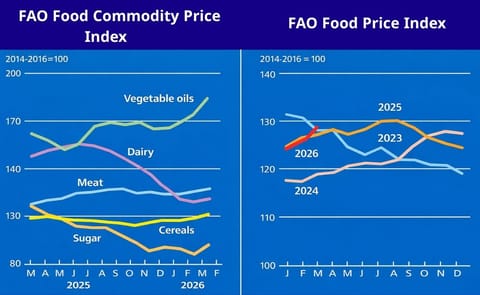
FAO Food Price Index rises for a second consecutive month, driven mostly by energy‑related pressures on vegetable oil and sugar prices
The FAO Food Price Index* (FFPI) averaged 128.5 points in March 2026, up 3.0 points (2.4 percent) from its revised February level, marking a second consecutive month of increase.
Latest News


Sponsored Content
Sponsored Content
Sponsored Content

Sponsored Content